

The Chicago City Council has approved an ordinance authorizing construction of the Chicago Torture Justice Memorial in Washington Park, marking a significant step in the city’s long-standing effort to acknowledge and memorialize victims of police torture.
The Chicago Torture Justice Memorials Foundation will use city-owned land at 5520–5538 S. Martin Luther King Jr. Drive. The parcels, collectively valued at $234,481, will be sold to the foundation for $1 each. The memorial honors victims of torture committed by members of the Chicago Police Department.
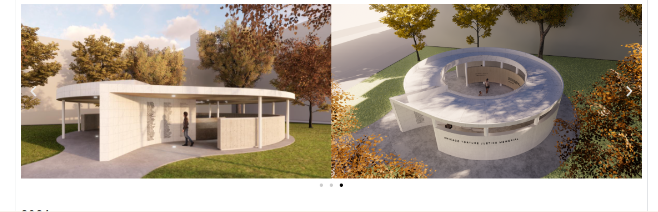
The $4.7 million project includes a 22-foot-tall memorial structure, landscaped grounds, and a designated gathering space within Washington Park. The memorial was designed by artist JAQ Corp in collaboration with Greenprint Partners.
“The first step to healing from injustice is accountability. The second step is remembrance,” said Mayor Brandon Johnson.
“The Chicago Torture Justice Memorial will be a testament to healing as the City of Chicago acknowledges the harm which still reverberates through our communities, while committing to doing better,” Johnson said. “This will be a powerful way for survivors to tell their stories, be seen, and heal. I’m grateful to the City Council for working with us to get this done and deliver justice for the victims after so many years.”
Alderman Jeanette Taylor (20th Ward) said the memorial represents a long-overdue reckoning with the city’s past.
“We cannot continue to ignore what has happened in the past as a result of the racist and classist practices of Chicago leaders like John Burge,” Taylor said. “These horrific acts stripped so much from our survivors, disrupting and altering their lives in ways that can never fully be repaired. But today, we came together as a city to say to the survivors and their families that you are not forgotten, we heard you, we wronged you, and we’re fighting to make it right—and never repeat these atrocities again.”
City Council approval advances a commitment first made in 2015, when Chicago pledged to memorialize victims of police torture and their families as part of the Reparations Ordinance. In 2023, Mayor Johnson announced a $6.8 million grant from the Mellon Foundation to support development of the memorial.
Organizers say the memorial will serve as a shared public space for education, reflection, and healing. It is intended to commemorate the struggle for justice, visibility, and reparations following decades of racially motivated violence.
In 2017, the Chicago Torture Justice Memorials Foundation began the process of commissioning artists to develop proposals for the permanent public memorial. Members of the foundation spent nearly a year crafting a Call for Proposals that incorporated input from survivors and their families about how the memorial should look and what story it should tell.
As the selection process moved forward, the foundation hired Hanna Jasper to curate an exhibition of memorial proposals. The exhibition, “Still Here: Torture, Resiliency, and the Art of Memorializing,” opened March 15, 2019, at Arts + Public Life’s Arts Incubator Gallery.
The exhibition educated the public about the legacy of police torture in Chicago and provided a platform for survivors to share their experiences. Survivors served as docents, and the foundation hosted film screenings, poetry readings, and community discussions to gather feedback on the memorial’s meaning for the South Side.
Organizers said the exhibition played a key role in selecting a final design and honoring the activists, organizers, and families who spent decades bringing torture claims to public attention.
The selected design was submitted by artist Patricia Nguyen and architect John Lee. Their proposal examines the historical remnants of police torture while creating a reparative space intended to support community healing.
The original design spans 1,600 square feet and features a winding hallway inscribed with the names and dates of Burge torture survivors. An open ceiling with a 16-foot-high threshold allows for natural light and a view of the sky. Designed for a park setting, the memorial extends into surrounding public space, offering visitors a reflective and accessible experience.